What Does C16 & C24
Timber Grading Mean
And Which Should You Use?
When you’re choosing structural softwood for a build, one of the most common questions is: what exactly do “C16” and “C24” mean? These strength grades help you pick the right timber for the job — whether it’s wall studs, roof joists, or floor frames. In this post, we break down what the grades mean, how they differ, and when to use each.
What Is Timber Strength Grading?
The letter “C” stands for “Coniferous”, meaning the timber comes from softwood species such as spruce, fir or pine.
The number (16 or 24) refers to the characteristic bending strength, measured in Newtons per square millimetre (N/mm²)
Grading ensures each piece meets a target strength, checked either by a visual grader or a machine.
In the UK, these strength classes are defined under BS EN 338.
C16 Timber – Key Features and Uses
What Does C16 Give You?
A minimum bending strength of 16 N/mm².
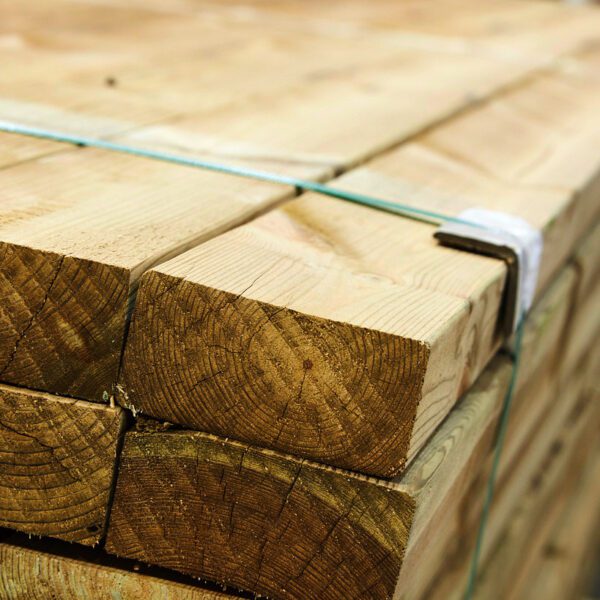
Typically kiln-dried to reduce moisture, making it more stable.
More likely to have knots and natural imperfections.
More affordable compared to higher grades.
Best Applications for C16
Stud walls / internal partitions
Roof battens or short-span joists.
General framing work where very high load-bearing capacity isn’t critical.
C24 Timber – What Makes It Stronge
What Does C24 Offer?
Minimum bending strength of 24 N/mm², making it significantly stronger than C16.
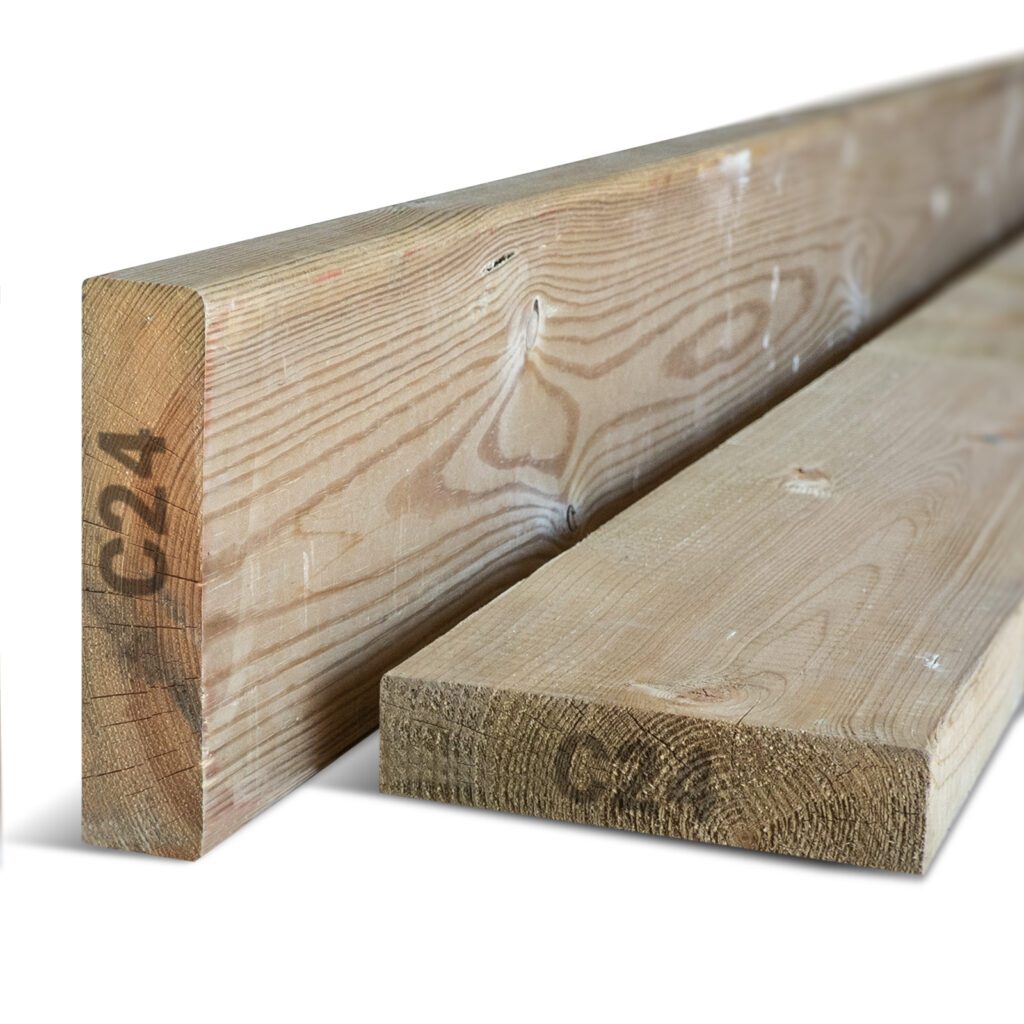
Higher density, fewer knots, and tighter grain structure.
More resistant to deflection (less bending), so better for longer spans.
Ideal Uses for C24
Floor joists and beams for extensions or heavy-load areas
Roof rafters, especially where long spans are needed
Exposed or decorative structural work where appearance matters.
Strength & Durability – What You Shouldn’t Assume
Grading ≠ Durability: The “C” grade tells you about strength, not how long the wood will last in exposed or damp conditions.
For outdoor or structural timber, check whether it’s been pressure-treated or specified for the correct use class.
Always look for the strength grade mark stamped on the timber – this ensures you are using the correct rated timber for structural work.
Choosing Between C16 and C24 – A Simple Guide
| Scenario | Recommended Grade |
|---|---|
| Internal stud walls, cheaper framing | C16 — plenty of strength for most non-critical uses |
| Floor joists, roofs, or structural spans | C24 — higher strength means safer and more reliable structures |
| Exposed frames or visible timber | C24, for better appearance and fewer knots |
| Large build on a budget | Mix – use C16 where strength requirements are lower, C24 where needed |
Summary
C16 and C24 are strength grades for softwood structural timber — the higher the number, the stronger the timber.
C16 is cost-effective and suitable for many standard construction jobs.
C24 offers higher strength, better visual quality, and is ideal for heavier or longer-span structural work.
The right grade depends on the duty required — always specify strength class correctly for safety and performance.
The DT Team is always on hand to answer any questions you may have.
Disclaimer: The content provided on this page is designed to serve as a general overview and should not be considered professional advice. While Dorchester Timber strives to ensure accuracy, we accept no responsibility for any outdated or inaccurate information presented here.